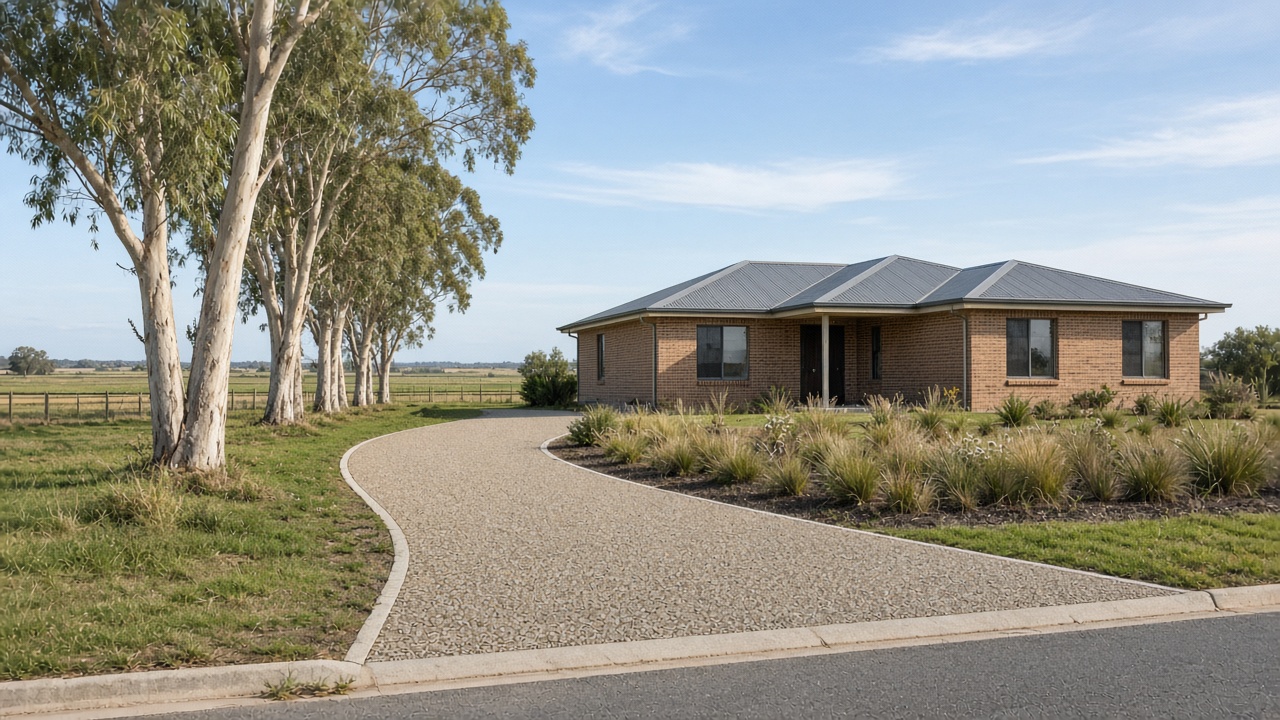
Concreting in Koo Wee Rup
Driveways, house slabs, patios, paths and crossovers poured for the peat and clay this old swamp town sits on — with written quotes and falls that actually drain.
Email: info@kooweerupconcreting.com.au
Concreting built for Koo Wee Rup, not a generic Melbourne template
Koo Wee Rup sits on land that used to be a swamp. That is not a marketing line. The township and the market gardens around it exist because the old Koo Wee Rup Swamp was drained from the late nineteenth century, leaving a flat, low landscape of peat, heavy clay and a water table that sits closer to the surface than it does in the hills. Concrete work here fails when that ground is ignored. A driveway that was detailed for a sandy rise in another suburb can pond, crack along a poorly prepared edge, or drop where soft peat was left under a thin base.
We are a local concreting team writing for this town first. The site you are on is for people in Koo Wee Rup 3981 and the hamlets around it who want a driveway, a slab, a patio, a path or a crossover poured properly, then left with a written quote and a tidy finish. We do not publish rates, because a sixty-metre farm entrance on peat is not the same job as a short estate driveway in town, and a number on a website would be guesswork. We come out, look at the ground, measure, and price the work as it really is.
What we will talk about on the first visit is practical. How water moves across your block after a Gippsland downpour. Whether the existing crossover is worth keeping. How deep we need to go to get off peat or wet clay. What finish will still look decent after a decade of utes, bins and irrigation overspray. And how we will keep the job clean on a small township lot or a working farm, without blocking the only way in and out.
Why ground prep matters more here than the colour chart
A lot of concreting websites lead with colour boards and pebble mixes. Those choices matter, and we will walk you through them. In Koo Wee Rup, though, the work that decides whether the slab still looks flat in five years happens before a truck arrives. Peat can compress. Heavy clay can shrink in a dry summer and swell again after a wet winter. If the soft material is not excavated, or if the crushed rock is not compacted in layers, the concrete will follow the movement underneath.
On many blocks we cut out to a firm level, put in a compacted crushed-rock base, and only then set formwork and steel. Some farm entrances need more depth or a thicker base than a tight township driveway. Some low corners need a spoon drain or a strip drain so water is not left sitting against a garage door. We would rather tell you that on the visit than pretend every driveway is a standard pour.
The flatness of the old swamp also changes drainage. There is rarely a natural fall to lean on. Falls have to be designed, not hoped for. We set levels so water leaves the house, leaves the garage, and leaves the crossover, instead of collecting at the letterbox or along a neighbour's fence. That is ordinary, careful work, and it is the main reason a driveway in this town should not be copied from a steep block in another shire.
What we pour in and around the township
Most of our work is residential and rural. New and replacement driveways, including longer acreage entrances and turning bays. Exposed aggregate, coloured and plain finishes, plus stamped or stencil work where a pattern is the right choice. House slabs, granny-flat slabs, and shed or garage slabs. Patios and alfresco floors. Paths, bin pads and small hardstands. Council-facing crossovers. Resurfacing and sealing where the existing slab is still sound. Steps, low retaining and removal of failed concrete so a new pour can go in on a proper base.
If you already know the finish you want, start on that service page. If you only know the problem — a cracked entrance, a muddy side gate, a shed you want to get off the dirt — start with a visit. We will tell you honestly whether a new pour, a resurface, or a smaller repair is the better path. We will not talk you into a full replacement if the slab can still do its job.
Peat, clay and the old swamp under the town
Stand on Station Street after a night of rain and you can see the character of this place. The land is flat, the drains work hard, and the soil under the grass is not the same as the clay rises toward Pakenham or the sandier country closer to the bay in some other parts of the region. Parts of Koo Wee Rup still carry peat from the old swamp. Other pockets are heavy clay. A single driveway can cross both.
We treat that as a site condition, not a surprise. On the quote visit we probe, we look at nearby pits or garden beds, and we talk about excavation depth in plain language. If we need to take out more material than a typical suburban driveway, we will say so before any work starts. If a farm entrance has been built up with fill over the years, we will check whether that fill is actually supporting anything. Guessing is how a new driveway inherits an old problem.
Township streets, market gardens and acreage entrances
Koo Wee Rup is not only one kind of block. In town, access can be tight, bins have to be moved, and a crossover has to meet Cardinia Shire's expectations where it meets the road. On the market-garden and farm side, the entrance is often longer, used by heavier vehicles, and wetter at the gate after irrigation or winter rain. Both are ordinary jobs for us, and both need a slightly different conversation about thickness, base, turning room and drainage.
We also work the nearby hamlets — Bayles, Cora Lynn, Cardinia, Tooradin, Lang Lang, Nar Nar Goon, Bunyip, Garfield, and through to Pakenham and Officer. Each of those pages is written for that place, not as a renamed copy of this one. If you are in town, this page is the right starting point.
Finishes that handle mud, irrigation and a flat street
Exposed aggregate is popular here because it hides a bit of dirt and stays sure-footed when the ground is wet. Coloured concrete can settle a house into a Colorbond roof and brick palette without looking busy. Plain broomed concrete is still the honest choice for sheds, side runs and many farm gates. Stamped or stencil work belongs on patios and some front walks when you want a pattern, not on a truck entrance that will be marked by implements.
We will show samples on site in the actual light of your street, not only on a phone screen. A warm stone mix that looks gentle in a showroom can read very different against a red-brick veneer and a pale sky out here. The finish is the last decision, not the first, and it should follow the way the place is used.
A site visit that is actually about your block
When you call or send the form, we will arrange a time to come to the property. The visit is free, and so is the written quote that follows. We are not there to walk around with a tape and leave you a vague range. We measure the area, look at access for trucks and a pump if one is needed, check levels from the house and the road, and look at how the existing crossover, drains and fences will affect the work.
Bring up the things that are easy to forget on a form. A side gate that is too narrow for a mini excavator. A rainwater tank overflow that dumps onto the future driveway. A neighbour's crossover that already sits high. A planned fence or carport. Irrigation lines along a farm entrance. The more of that we see on day one, the fewer surprises show up when we start.
After the visit we send a written quote that spells out the scope, the finish, the prep we believe is required, and the inclusions. If we think a cheaper path exists — keeping a sound slab and resurfacing, or replacing only the failed section — we will put that in front of you as well. You can sit with it. There is no script that needs an answer the same afternoon.
How a typical pour week runs in this town
Once you accept a quote and we agree a start window, the work follows a clear order. We protect access and neighbouring surfaces as needed, then excavate to the depth the quote described. Soft or wet material comes out. The base goes in and is compacted in layers. Formwork is set to the falls we marked. Steel or mesh is placed and supported so it sits in the slab, not on the dirt. On pour day the truck or pump places the concrete, we screed, edge, joint and finish to the agreed texture, then we leave the slab to cure with the right protection for the weather that week.
Curing is not a footnote in Koo Wee Rup. A hot north wind can dry a surface too fast. A winter downpour can mark an unprotected finish. We plan pours around the forecast and we will move a day if the weather would harm the work. Afterward we cut control joints at the spacings the slab needs, tidy the edges, and walk you through when you can walk on it, drive on it, and — if it is in the quote — when a sealer should go on.
Removal jobs add a first day of breaking out and carting away the old concrete. Crossover jobs add the council piece: the part that sits in the road reserve has to be done to the shire's requirements, and we will talk about that before we start rather than after a request for information lands.
Written quotes, no public price list
You will see a lot of search results that put a figure in the title. We do not do that, and we will not add a calculator to this site. The reason is not coyness. It is that peat depth, access, thickness, reinforcement, drainage, finish and the state of the existing crossover all move the figure, sometimes a long way. A number published for a five-by-five square would be wrong for most of the driveways we actually pour here.
What we can say clearly is this. The visit is free. The quote is written and itemised. You are not charged to ask a question after you receive it. If the scope changes because we find something in the ground, we talk to you before we add work. If you are comparing quotes, compare what is in them — excavation depth, base, steel, joints, sealing, crossover, and who is responsible for council — not only the number on the last line.
Seasons, rain and working around a market-garden calendar
Gippsland weather shapes the calendar. Late autumn and winter can be wet enough that excavation in peat becomes messy and compaction is harder to get right. High summer can be fine for many pours, but the finish needs protection from rapid drying. Spring and autumn are often kind, with the usual caveat that a single storm can rearrange a week.
On market-garden and farm properties we also work around how the place is used. Harvest traffic, irrigation cycles and the need to keep one entrance open all influence how we stage a longer driveway. We would rather split a job or keep a temporary access than leave you unable to get a truck in. Tell us how the property runs and we will plan around it.
Cardinia Shire crossovers and the public part of the job
A driveway does not always end at the front boundary. The section from the boundary to the road is often a crossover in the Cardinia Shire road reserve, and that part of the work has rules. Levels have to meet the kerb or table drain. The finish and thickness have to be suitable for the road. In some streets a permit or a specific construction detail is required.
We look at the existing crossover on the first visit. If it is sound and matches the new driveway, we may recommend keeping it and meeting it cleanly. If it is broken, too high, too low, or the wrong profile, we will quote to replace it properly rather than disguise it. It is better to deal with the public edge once than to pour a beautiful driveway that ponds at a failed lip.
Koo Wee Rup soil, water and Cardinia Shire rules
Koo Wee Rup sits on land that was once a swamp, drained from the late nineteenth century so the township and the market gardens could exist. Under the grass you will often find peat, heavy clay, or a mix of the two, with a water table that can sit closer to the surface than it does in the hills. Peat can compress. Clay can shrink and swell with the seasons. A slab poured thin, straight onto that ground, will move with it.
We dig until we reach firm material, take out soft or wet soil, compact crushed rock in layers, set steel on chairs, and design falls so water leaves the house and the garage on this flat land. Winter rain can make compaction harder. A hot north wind can dry a finish too fast. We plan around both. Concrete inside your boundary rarely needs a council permit. Work in the road reserve — a crossover, a nature strip, a public footpath — can need Cardinia Shire's consent. A slab that will carry a building needs a building permit and, usually, engineering. Your quote spells out which of these apply.
How your Koo Wee Rup quote is put together
Every quote we send is written and itemised. It describes the area we measured, the excavation and where the spoil or old concrete will go, the compacted crushed-rock base, the slab thickness, the steel and how it will be supported, the finish, any sealer, and extras such as a drain, a step, a border or a new crossover. If Cardinia Shire or a building surveyor has to be involved, the quote names that rather than leaving it as a surprise.
The quote also describes the practical side of the pour: where a truck or pump would stand, how we protect gardens and fences, and how long the area needs to stay closed. If we think the ground may hide a problem — wet peat, an old slab, a pipe — we say so and explain how we would handle it. There are no prices on this website because two blocks in the same Koo Wee Rup street can need very different prep. The visit and the written quote cost you nothing.
Concreting services in Koo Wee Rup
Concrete Driveways
A driveway in Koo Wee Rup has to deal with flat ground, peat or clay under the surface, and the way water sits after rain. We design the falls, dig to a firm base, and finish it for the way you actually use the entrance.
More about driveways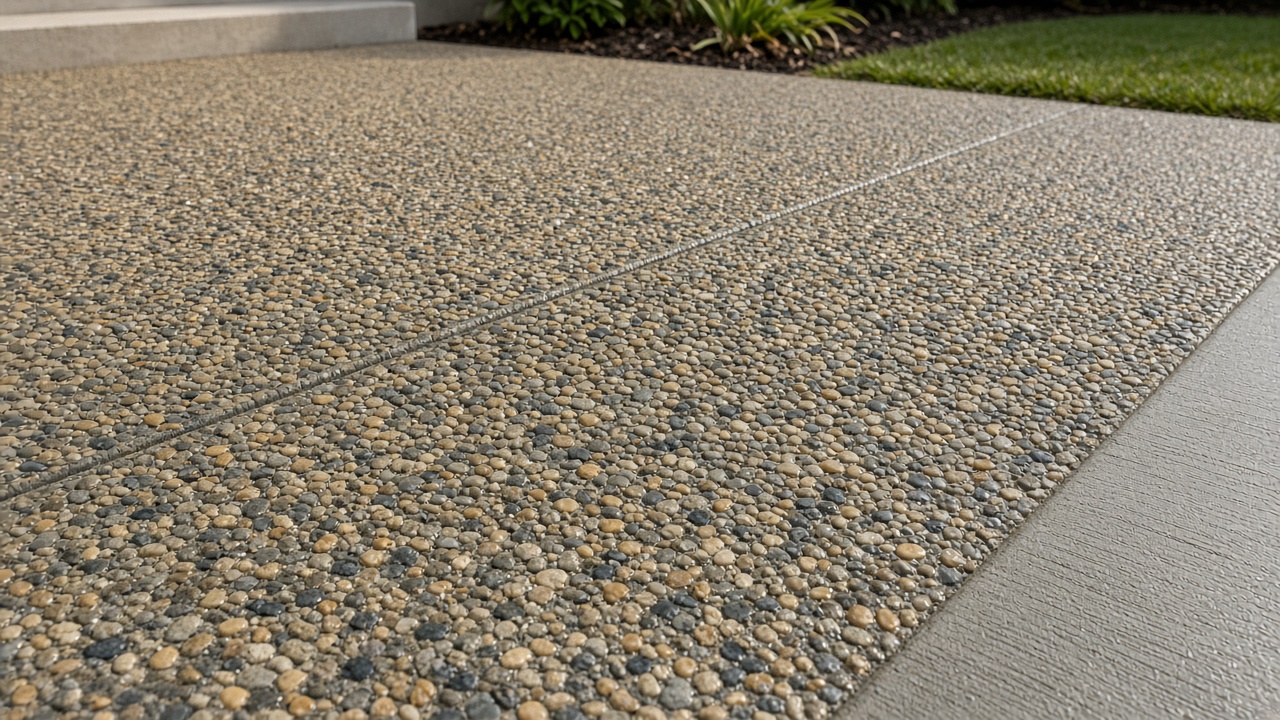
Exposed Aggregate
Exposed aggregate is the finish many Koo Wee Rup homes ask for first: a sure-footed, stone-textured surface that copes with wet weather and everyday dirt when the base and the wash are done properly.
More about exposed aggregate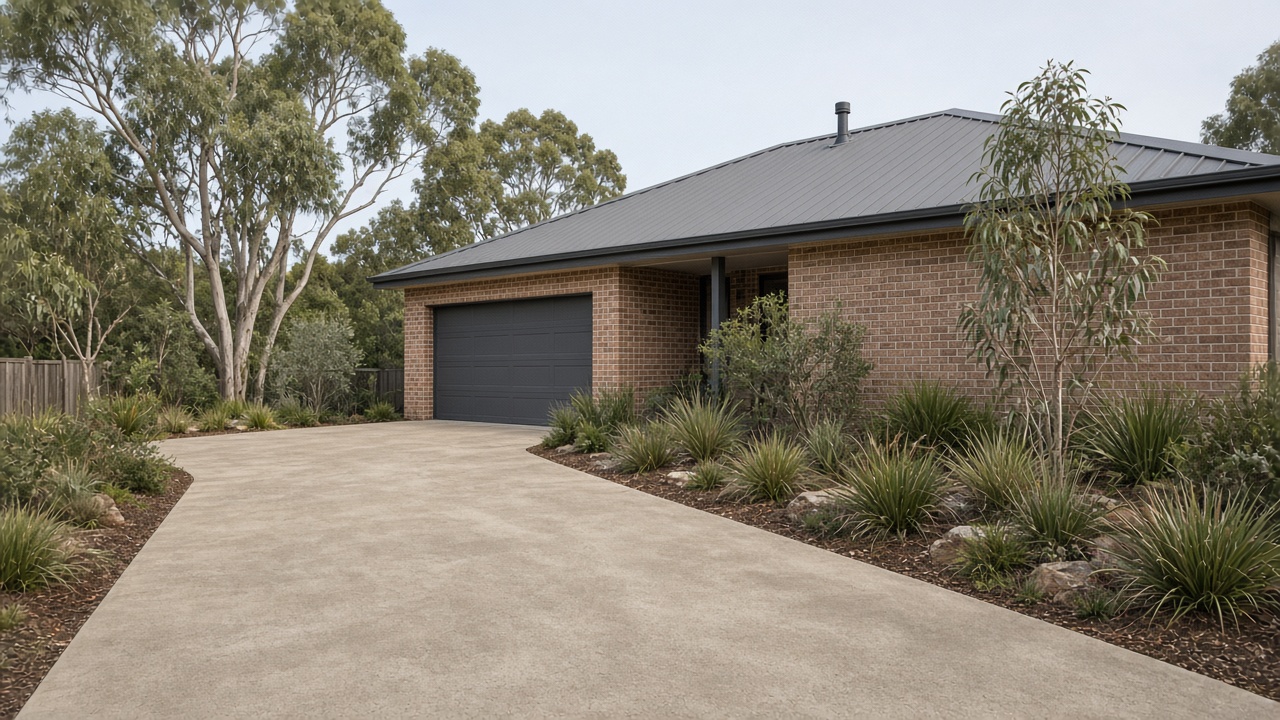
Coloured Concrete
A through-coloured slab can warm up a Koo Wee Rup house without a busy pattern, as long as the colour is chosen in the real light of the street and the base is built for the ground.
More about coloured concrete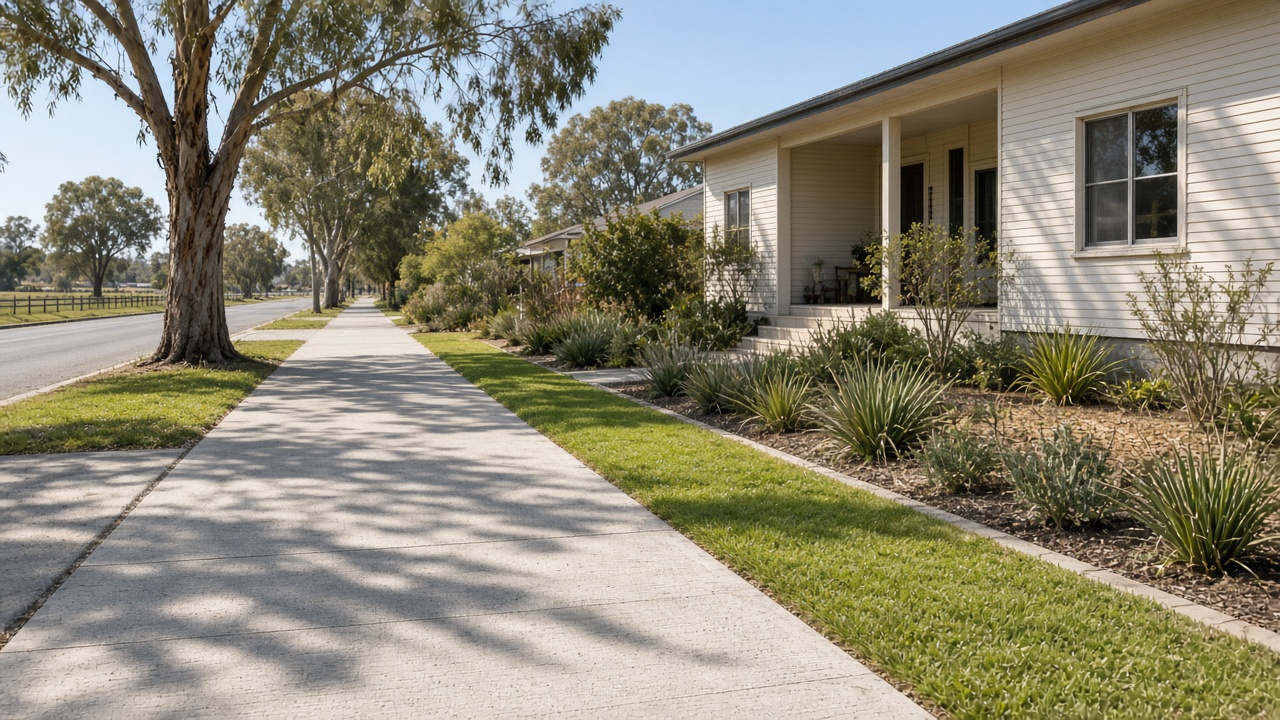
Plain Concrete
Plain broomed concrete is still the honest finish for many Koo Wee Rup jobs: sheds, side runs, farm gates and tidy township driveways where the money should go into the base.
More about plain concrete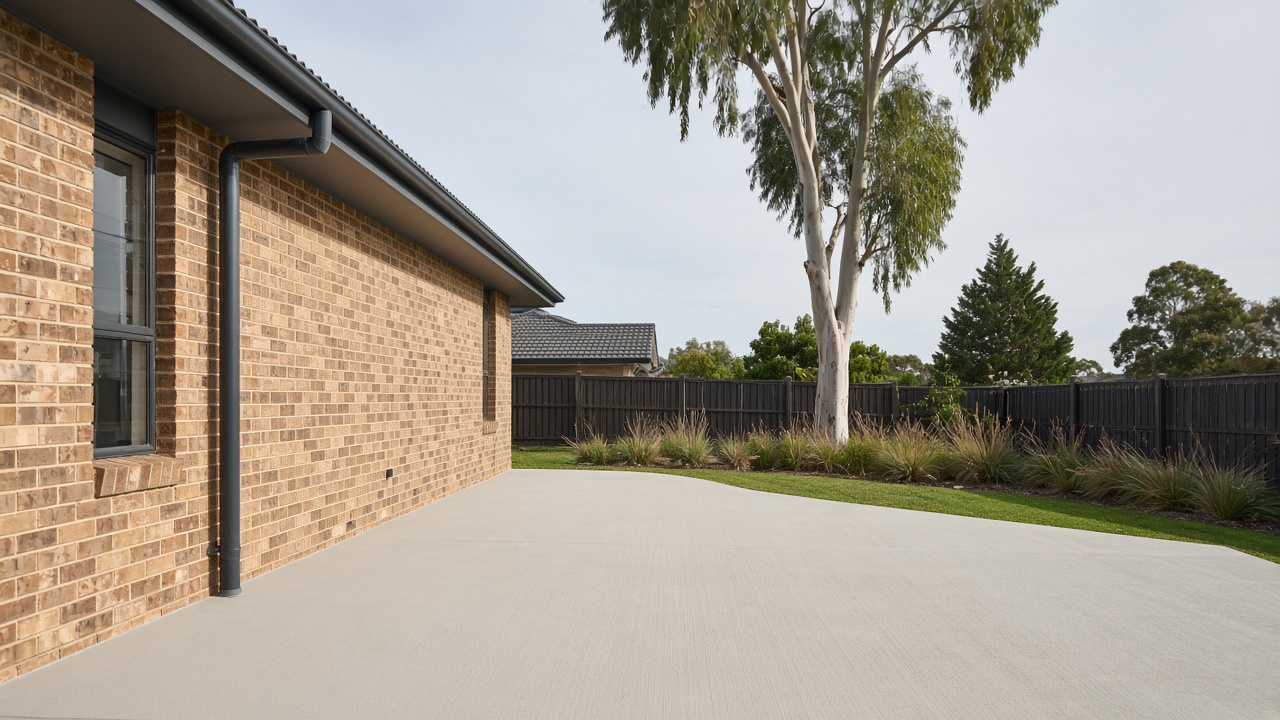
Stamped Concrete
Stamped and stencil concrete can give a Koo Wee Rup patio or front path a patterned look, as long as the pattern is chosen for light use and the slab underneath is built for the ground.
More about stamped and stencil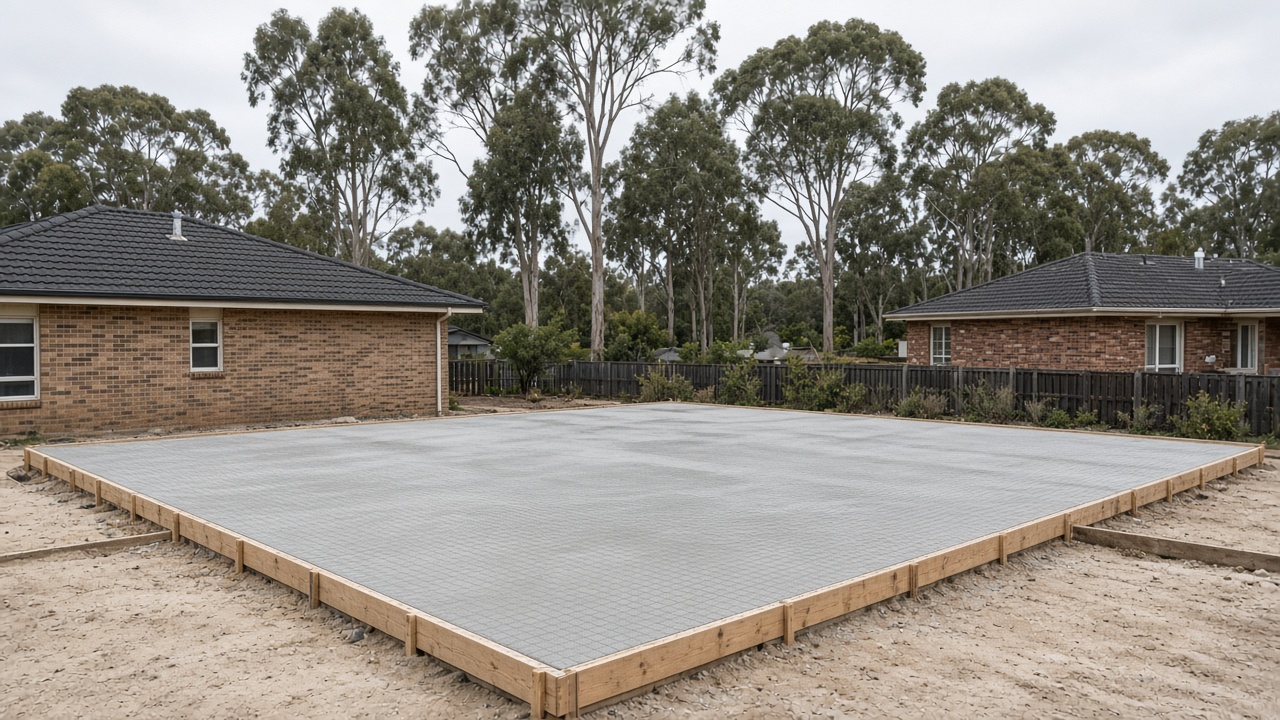
House Slabs
A house slab in Koo Wee Rup has to respect the peat and clay under this old swamp town, the Australian standards for residential slabs, and the way a flat site still needs planned drainage.
More about house slabsShed and Garage Slabs
Shed and garage slabs in Koo Wee Rup need the right thickness, falls that keep water out of the door, and a base that will not settle under a workshop load or a parked vehicle.
More about shed and garage slabsPatios and Alfresco
A concrete patio or alfresco floor in Koo Wee Rup should fall away from the house, feel sure-footed after rain, and sit comfortably with the brick, the roof and the way you actually use the backyard.
More about patios and alfrescoPaths and Footpaths
Paths and footpaths in Koo Wee Rup need sure footing, tidy edges and falls that do not leave a puddle at the gate after a night of rain.
More about paths and footpaths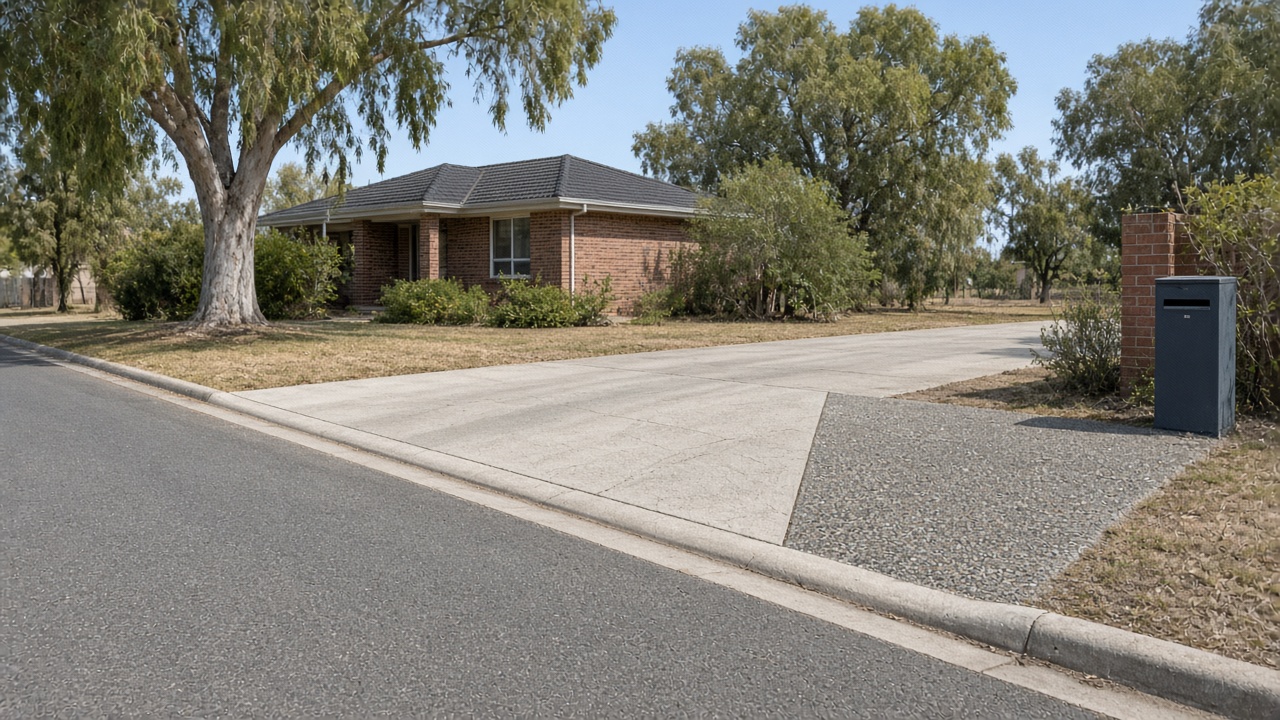
Crossovers
The crossover is the public edge of your driveway: the section in the Cardinia Shire road reserve that has to meet the kerb, drain properly and stand up to street traffic.
More about crossoversConcrete Resurfacing
Resurfacing can give a sound Koo Wee Rup slab a new face. It is the wrong choice if the concrete has already dropped, rocked or failed at the edges — and we will tell you which is which.
More about resurfacingConcrete Sealing
Sealing helps a Koo Wee Rup driveway or patio resist stains and weather, but it is a maintenance job, not a cure for a slab that was poured on poor ground.
More about sealingRetaining Walls and Steps
On a flat town like Koo Wee Rup, steps and low walls are often about a small level change at a door, a garden or a driveway — and they have to be poured so they do not trap water or trip a foot.
More about walls and stepsRemoval and Replacement
When a Koo Wee Rup slab has failed, we break it out, take it away, and rebuild on a base that suits the peat or clay underneath — rather than pouring a new face on a known problem.
More about removal and replacementWhat you get with Koo Wee Rup Concreting
Local to Koo Wee Rup 3981
We work the township first, then the hamlets and neighbouring Cardinia towns we actually drive to every week.
Built for peat, clay and flat ground
Deeper prep where the old swamp soil needs it, compacted bases, and falls that drain on land with almost no natural slope.
Free written quotes
Every job is itemised. No website rates, no pressure, and no charge to visit or to send the quote.
Shire-edge work handled clearly
Crossovers in the road reserve and any permit questions are named in the quote before we start.
Six steps to a finished job
- 1
Get in touch
Call, email, or send the form with a few photos of the area, the front of the property, and any tight gate.
- 2
Site visit
We measure, look at the ground, check levels and the crossover, and bring finish samples to hold against the house.
- 3
Written quote
You get an itemised quote covering digging, base, thickness, steel, finish, drainage and any shire or permit work.
- 4
Base and formwork
We remove failed concrete or topsoil, excavate soft material, compact the base, set the forms and place steel.
- 5
Pour and finish
Concrete is placed, levelled and finished, then protected while it cures in the week's weather.
- 6
Clean-up and care
We strip the forms, cut joints, take the rubble away, seal if it was quoted, and leave you care notes.
Driveways, aggregate and slabs around Koo Wee Rup
Exposed aggregate, colour and broom finishes, with straight edges, tidy joints and falls that move water away on this flat ground.
Photos: illustrative images of the residential concrete work and finishes we offer in this area.
Towns we cover around Koo Wee Rup
From the township itself we regularly pour in the surrounding hamlets and the larger neighbouring centres of the shire. Every area page is written for that place — the soil, the access and the kind of blocks we actually see.
Bayles 3981
Bayles is a small rural settlement just west of Koo Wee Rup, where farm lanes, the recreation reserve and quiet local roads shape the way a driveway or slab should be built.
Concreting in BaylesCora Lynn 3814
Cora Lynn sits north-west of Koo Wee Rup as a farming hamlet, with long rural driveways, the recreation reserve, and the same peat-and-clay questions that shape concreting across this old swamp country.
Concreting in Cora LynnCardinia 3978
Cardinia township, near Cardinia Creek, is a rural neighbour of Koo Wee Rup with farm holdings, lifestyle blocks and the same need for careful base work on low, sometimes wet ground.
Concreting in CardiniaTooradin 3980
Tooradin sits on Western Port, where lower-lying ground, boat trailers and salt air change the way a driveway, hardstand or patio should be detailed.
Concreting in TooradinLang Lang 3984
Lang Lang, on the South Gippsland Highway, is a service town with township blocks and broad acreage toward the coast — and concreting work that has to handle both.
Concreting in Lang LangNar Nar Goon 3812
Nar Nar Goon sits north of Koo Wee Rup, where older farms meet newer houses on the way toward Pakenham, and where a driveway has to work for both kinds of block.
Concreting in Nar Nar GoonBunyip 3815
Bunyip is a railway township north-east of Koo Wee Rup, a little higher than the old swamp, with a main street, mixed blocks, and concreting work that still has to respect clay, falls and access.
Concreting in BunyipGarfield 3814
Garfield sits between Bunyip and Nar Nar Goon as a small township with village streets and farm tracks in every direction, and concreting work that covers both.
Concreting in GarfieldPakenham 3810
Pakenham is the large neighbouring centre in Cardinia Shire. We pour driveways, slabs and crossovers there as part of the same local coverage, with unique attention to estate streets as well as older parts of town.
Concreting in PakenhamOfficer 3809
Officer, in Cardinia Shire's western growth corridor, is a place of new estates, tighter lots and council crossovers — and concreting work that has to be precise at the street edge.
Concreting in OfficerQuestions people ask before they call
What is the cheapest concrete driveway?
The cheapest driveway is usually the one that puts money into a proper base and a simple broomed finish, not the one with the lowest number on a flyer. In Koo Wee Rup, skipping excavation on peat or clay is how a cheap driveway becomes a replacement. We will tell you if a plain finish or a partial replacement is the sensible way to spend the budget. We will not publish a cheap rate that ignores the ground.
Can you pebblecrete over existing concrete?
Some overlay systems can give a textured, stone-like look on a slab that is still sound and stable. If the existing concrete has dropped, rocked or failed at the edges, an overlay will follow that movement. We only recommend a new face when the old slab deserves one.
Is it cheaper to concrete or pave a driveway?
It depends on the ground, the size, the access and the finish, and on how you want the surface to wear. We pour concrete, and we will tell you if a concrete driveway or patio is a good fit for your block. We will not run a price comparison on this site, because the figure only becomes real after a visit.
What is the best thing to clean a concrete driveway with?
Start with a broom and a hose. A careful light pressure clean is usually enough for ordinary dirt. Harsh acids and aggressive high-pressure work can mark the surface and damage a sealer. For oil or rust, ask us before you try a strong product.
How much roughly for a 5x5m driveway in Australia?
We do not publish a figure for a five-by-five square, in Australia or in Koo Wee Rup. Access, ground, thickness, the crossover and the finish all change the job. A small driveway on peat can need more prep than a larger driveway on firm ground. We will measure yours and put the scope in writing.
What are the downsides of exposed aggregate concrete driveways?
The texture can hold a little more dirt than a smooth slab, the wash has to be done well or the surface looks patchy, and it is not the simplest finish to produce. It is also not ideal if you want a floor you can mop like an indoor room. The grip and the way it hides everyday marks are why it is still a good choice on many wet, well-used Koo Wee Rup driveways.
How much does it cost to do an exposed aggregate driveway?
We do not list a rate. Stone, the extra labour of the wash, the size, the access and — in this town — the ground all move the figure. We quote after we have seen the property.
How often should you seal an exposed aggregate driveway?
It depends on the sealer, the weather and how the driveway is used. We recommend a first seal at the right time after curing, then a look later. If water no longer beads, or stains start to sit in, it is time to talk about a clean and a new coat.
How to make exposed aggregate concrete smooth?
Ordinary exposed aggregate is meant to have the stone slightly proud of the surface, which is what gives it grip. A honed or polished look is a different process and should be chosen at the start, not treated as a quick way to flatten a wash you later decide you dislike.
How much does a concrete house slab cost per square metre in Australia?
We do not publish a square-metre rate. Engineering, soil, access, thickness, edge beams and the complexity of the set-out all change the figure. We quote from the drawings and from a look at the site.
What is the recommended slab thickness for a two-story house in Australia?
There is no single thickness for every two-storey house. The engineer designs the slab for the soil and the loads on that site. In Koo Wee Rup those soil conditions can be quite specific. We pour to the drawings, not to a generic number from a search result.
What is the Australian standard for concrete slabs?
Residential slabs and footings are designed and built to the relevant Australian standard, with a soil report and engineering behind the details. We work to that design. The class of slab your site needs starts with the soil assessment, not with a paragraph on a website.
How thick is the slab for a two story house?
Again, the thickness is a design decision, not a single district rule. Two-storey loads and the soil class both matter. We will pour what the engineer has specified, and we will not thin a slab to make a day easier.
Talk to a Koo Wee Rup concreter
We visit, measure and put it in writing for work in Koo Wee Rup 3981 and the Cardinia towns around it. Nothing on this site is priced, because no two blocks are the same.