Concrete sealing in Koo Wee Rup
Sealing helps a Koo Wee Rup driveway or patio resist stains and weather, but it is a maintenance job, not a cure for a slab that was poured on poor ground.
Email: info@kooweerupconcreting.com.au
What a sealer can and cannot do
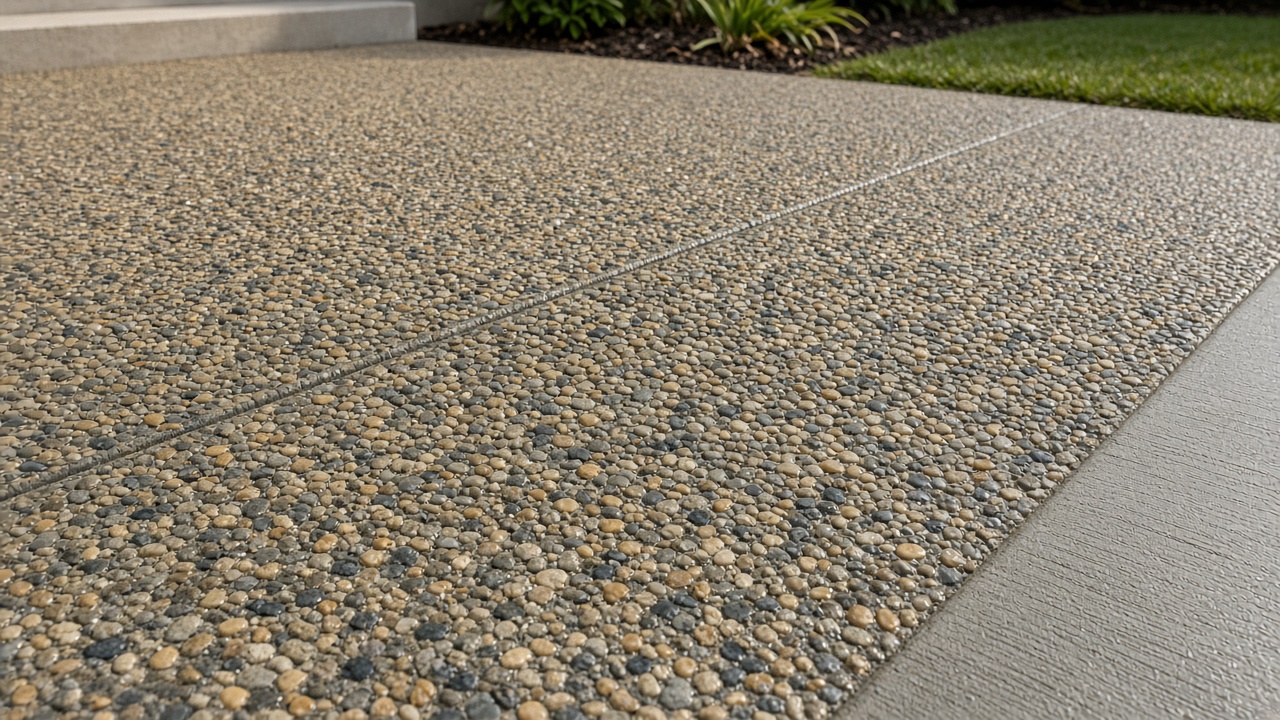
A sealer is a protective coat. It can make cleaning easier, help with oil and leaf stains, and deepen the look of exposed aggregate or coloured concrete. It cannot hold together a cracked slab, fix a pond, or stop peat from settling under a thin base. We will seal new work when it is in the quote, and we will reseal older surfaces when they are sound and clean enough for the product to do its job.
If someone has told you that sealing will stop all cracking or remove the need to clean, that is not true. A sealed driveway still needs an occasional hose. Joints still do their work. The sealer just gives the surface a better chance against stains and weathering.
New pours and the right time to seal
On a new driveway or patio, sealing too early can trap moisture or mark the finish. We time the first coat to the mix, the weather and the finish type, then we tell you when you can walk and drive on it after that coat. If sealing is not in the first quote, we can still come back and do it once the slab has had its proper cure.
Different finishes like different products. A glossy coat on a driveway can look handsome and then become slippery. We choose a sealer that suits the use, especially on paths and north-facing patios that get wet.
Cleaning before a reseal
An old driveway has to be clean before a new coat will bond. That usually means a proper wash, sometimes a light pressure clean, and time to dry. Oil stains may need more than a single pass. We will look at the surface and tell you if it is ready, or if a deeper clean or a repair should happen first. Sealing over dirt is how a coat peels.
Why we seal some jobs and leave others honest and unsealed
A sealer can deepen a colour, help an exposed aggregate clean more easily, and give a new driveway a finished look. It can also go glossy, wear in turning circles, and need a later refresh. In Koo Wee Rup we talk about sealing as a choice, not as an automatic extra. A working farm entrance that will see mud and implements may be better left with a well-made, unsealed texture. A front township driveway in a mid tone, or an exposed patio you want to keep looking fresh, is often a better candidate.
We will not seal a slab that is not ready, and we will not use a product that fights the way you actually use the surface. If you have young children, a steepish path, or an area that stays damp, we will talk about grip as well as appearance.
Timing, weather and a first-week discipline
Sealing is a finishing trade of its own. The slab has to be ready, the day has to be right, and the surface has to be clean. We would rather come back at the right time than roll a sealer over a slab that is still settling or still holding moisture. After it goes on, the same first-week care applies: no early traffic, no skip, no builder's pallet on a young film.
If a later refresh is needed, the old sealer and the condition of the surface have to be judged first. A second coat over a failing one is not a kindness.
Cleaning that does not undo the work
Once a sealer is on, harsh cleaning can mark it. Ordinary sweeping, a hose, and a mild cleaner used with some patience will do more good than a fierce blast. If oil or irrigation marks appear, come back to us rather than experimenting with a strong product on a weekend. We would rather tell you a simple method than see a dull patch in the place you look at every time you come home.
Choosing a look that will still please you in year three
The first afternoon of a sealed driveway can look richer than the slab will look after a summer and a winter of use. That is normal. Turning circles wear. A film weathers. The question is whether the sealed surface still helps you — easier cleaning, a colour you still like, enough grip — or whether it becomes a glossy worry. We would rather choose a quieter, more appropriate product, or sometimes no sealer at all, than sell a shine that fights the way the drive is used.
If you already have a sealer that is patchy, the honest first step is to look at what is left and whether it should be renewed, stripped, or left alone. Adding another product on top is only right when the base film is sound. We will tell you what we see, including if the kindest advice is to wait, clean, and do nothing this season.
When we would come back, and when we would leave the slab alone
Not every marked sealer needs a rush job. A driveway that is still doing its work, with ordinary wear in the turning circle and a film that is thinning evenly, may only need a conversation and a later refresh. A sealer that is peeling, patchy, or dangerously glossy in the wet needs a closer look. We will tell you which of those we think you have, and we will not roll a new product over a failing one just to make the surface look wet for a weekend.
If you are deciding on a sealer as part of a new pour, ask us to write it into the quote as a clear item, with a note about timing. If you already have a slab and you are only asking about sealing now, a short visit is still the right start. Bring a note of how the surface is used and whether you have had a product on it before. That saves a guess, and it keeps the work honest.
Koo Wee Rup soil, water and Cardinia Shire rules
Koo Wee Rup sits on land that was once a swamp, drained from the late nineteenth century so the township and the market gardens could exist. Under the grass you will often find peat, heavy clay, or a mix of the two, with a water table that can sit closer to the surface than it does in the hills. Peat can compress. Clay can shrink and swell with the seasons. A slab poured thin, straight onto that ground, will move with it.
We dig until we reach firm material, take out soft or wet soil, compact crushed rock in layers, set steel on chairs, and design falls so water leaves the house and the garage on this flat land. Winter rain can make compaction harder. A hot north wind can dry a finish too fast. We plan around both. Concrete inside your boundary rarely needs a council permit. Work in the road reserve — a crossover, a nature strip, a public footpath — can need Cardinia Shire's consent. A slab that will carry a building needs a building permit and, usually, engineering. Your quote spells out which of these apply.
How your Koo Wee Rup quote is put together
Every quote we send is written and itemised. It describes the area we measured, the excavation and where the spoil or old concrete will go, the compacted crushed-rock base, the slab thickness, the steel and how it will be supported, the finish, any sealer, and extras such as a drain, a step, a border or a new crossover. If Cardinia Shire or a building surveyor has to be involved, the quote names that rather than leaving it as a surprise.
The quote also describes the practical side of the pour: where a truck or pump would stand, how we protect gardens and fences, and how long the area needs to stay closed. If we think the ground may hide a problem — wet peat, an old slab, a pipe — we say so and explain how we would handle it. There are no prices on this website because two blocks in the same Koo Wee Rup street can need very different prep. The visit and the written quote cost you nothing.
What you get with Koo Wee Rup Concreting
Local to Koo Wee Rup 3981
We work the township first, then the hamlets and neighbouring Cardinia towns we actually drive to every week.
Built for peat, clay and flat ground
Deeper prep where the old swamp soil needs it, compacted bases, and falls that drain on land with almost no natural slope.
Free written quotes
Every job is itemised. No website rates, no pressure, and no charge to visit or to send the quote.
Shire-edge work handled clearly
Crossovers in the road reserve and any permit questions are named in the quote before we start.
Six steps to a finished job
- 1
Get in touch
Call, email, or send the form with a few photos of the area, the front of the property, and any tight gate.
- 2
Site visit
We measure, look at the ground, check levels and the crossover, and bring finish samples to hold against the house.
- 3
Written quote
You get an itemised quote covering digging, base, thickness, steel, finish, drainage and any shire or permit work.
- 4
Base and formwork
We remove failed concrete or topsoil, excavate soft material, compact the base, set the forms and place steel.
- 5
Pour and finish
Concrete is placed, levelled and finished, then protected while it cures in the week's weather.
- 6
Clean-up and care
We strip the forms, cut joints, take the rubble away, seal if it was quoted, and leave you care notes.
Concrete Sealing questions
How often should a driveway be sealed?
It varies with the product, the sun, the traffic and the weather. We prefer to inspect the surface and reseal when water stops beading or when stains start to sit in, rather than pretending every driveway in the district is on the same calendar.
What is the best thing to clean a concrete driveway with?
Start with a broom and a hose. A light pressure clean, used carefully, is usually enough for everyday dirt. Harsh acids and aggressive high-pressure work can mark the surface and damage a sealer. If oil or rust is sitting in, ask us before you try a strong product.
Where we work
Other concreting services
Talk to a Koo Wee Rup concreter
We visit, measure and put it in writing for work in Koo Wee Rup 3981 and the Cardinia towns around it. Nothing on this site is priced, because no two blocks are the same.